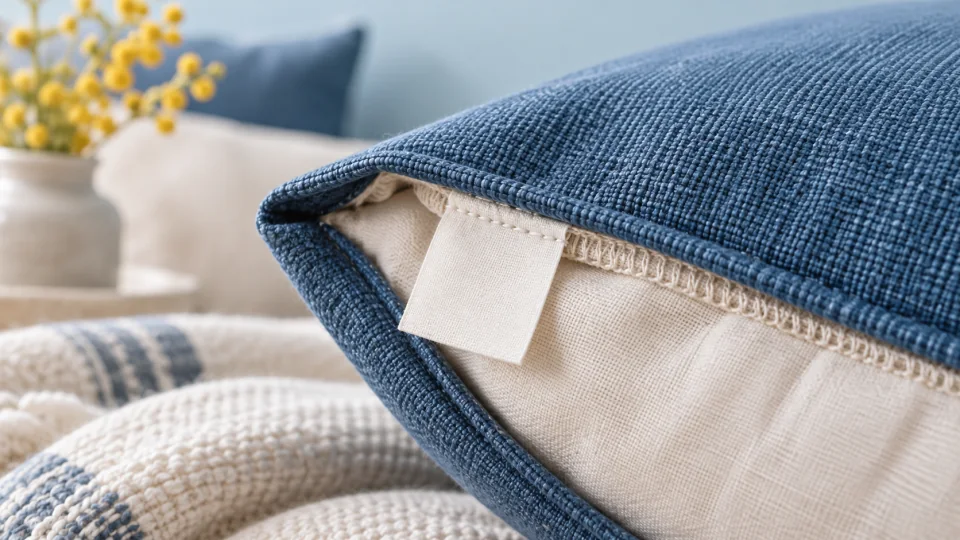
Find the furniture manufacturer's care tag before using a cleaner. The fabric name, a zipper or a removable cushion does not establish which treatment is permitted. This page turns that rule into a short decision sheet you can fill in beside the furniture: what the tag says, what it does not say, what to check on the whole item, and what to ask if you are thinking of hiring a professional.
What cleaning codes mean
Ashley's published code guide illustrates the common conventions below. Follow your own manufacturer's wording if it differs. The four codes are separate instructions rather than grades of a single instruction, and the differences between them matter more than the letters themselves.
Two distinctions are easy to blur. W describes a water-based upholstery shampoo or foam used without over-wetting; it is not blanket permission to machine-wash a cover. S names a dry-cleaning-solvent method and is not water, so a damp cloth is not a safe middle course. WS or SW means the maker has named more than one upholstery-cleaning option, each to be used as directed. X is the most restrictive entry: vacuuming or light brushing only, with no water- or solvent-based cleaner.
An archived page from this web address once covered furniture cleaning. It is cited only to show that the subject was historically within this site's scope; it is not a source for current methods, products or results.
- W: water-based upholstery shampoo or foam, without over-wetting; not blanket permission to machine-wash.
- S: the specified dry-cleaning-solvent method; not water.
- WS or SW: the upholstery-cleaning options named by the maker, used as directed.
- X: vacuuming or light brushing only; no water- or solvent-based cleaner.
Step one: locate and record the tag
This is a suggested process, not a standard. Before any cloth or cleaner is wet, find the maker's tag and write down exactly what it says. A cover, a set of cushions and the body of a piece may not share one set of instructions, so look at each part and note which part each tag seems to describe. Keep any paperwork from the supplier with your notes, and photograph the tag so you can show it to a supplier or professional later.
If the tag is missing or unclear, the next step is to ask the supplier before applying liquid. Judging by the look or feel of the fabric is not a substitute, because the fabric name alone does not establish which treatment the maker permits.
- The code letter or letters exactly as printed, and any words printed beside them.
- Which part of the item the tag appears to describe: a cover, a cushion or the piece as a whole.
- Whether the tag is complete and legible, or worn, cut or missing.
- The maker's and item's names, if printed, so a supplier can identify the piece.
- Anything on the tag that this page does not mention. The printed wording outranks the summaries here.
Decision sheet: from code to first decision
Use this sheet once the tag has been read. Each line gives a cautious first decision and a point at which to stop. It summarises the conventions above; it does not replace the maker's wording or the directions printed on any product, and it promises no outcome.
- Tag reads W. First decision: look for a water-based upholstery shampoo or foam that both the maker's wording and the product's own directions allow, and use it without over-wetting. Stop if the product directions and the tag seem to disagree, if the tag says something this sheet does not cover, or if colour or texture changes during a test the maker recommends.
- Tag reads S. The code points to the dry-cleaning-solvent method specified for the item, not to water-based cleaning. It does not identify or approve a particular solvent product by itself. Check the furniture maker's instructions before choosing a product or applying anything. Any product must be permitted by those furniture instructions and used according to its own directions. If the permitted method or product is unclear, ask the maker, supplier or an appropriate professional.
- Tag reads WS or SW. First decision: the maker has named upholstery-cleaning options; choose one and use it as directed. This page does not describe combining or layering methods, so ask the maker before attempting that. Stop if you cannot tell which named option suits the item in front of you.
- Tag reads X. First decision: vacuum or brush lightly and apply no water- or solvent-based cleaner. Stop there. For a mark that dry methods do not address, ask the supplier or a specialist what the maker allows rather than trying a liquid.
- No tag, or a tag that cannot be read. First decision: do not apply liquid. Ask the supplier, and share your photograph and notes.
- The part in question is leather. First decision: treat it separately. The fabric codes above are not leather instructions, and neither is a generic damp-cloth rule. Ask the maker or supplier for guidance on the leather itself.
Check the whole item
If the tag is missing or unclear, ask the supplier before applying liquid. A zippered cover is not necessarily washable.
Use attachments and cleaner settings suitable for the fabric, and test a permitted product where the manufacturer recommends it.
Cleaning instructions for leather should not be inferred from fabric codes or from a generic damp-cloth rule.
Walk round the whole piece before liquid
Checking the whole item means looking at everything the cleaning will touch, not only the one stained cushion. The list below is a suggestion for gathering information, whether you or a professional will do the work. Where an answer is unclear, treat it as a question for the supplier rather than a gap to fill by assumption.
- Cover and cushions: do they all carry the same tag and code, or do some differ?
- Trim or panels in another material, such as leather or a different weave: check whether the manufacturer's instructions explicitly cover them. Do not assume that a code for one part applies to another.
- Legs, base and any wooden or hidden components: how will they be protected from liquid and from equipment?
- The floor and nearby furniture: what lies beneath and beside the piece, and how will it be protected?
- A hidden area for any test the manufacturer recommends.
- Attachments and cleaner settings: are they suitable for this fabric?
A zip or a code does not authorise washing or a protector
A zip tells you how a cover is built. It does not tell you whether the maker permits laundering, and a cleaning code such as W is not blanket permission to machine-wash. Treat removable covers the same way as any other part: the maker's wording decides.
The same caution applies to protectors. A cleaning code describes permitted cleaning methods; it does not by itself authorise a protector treatment. If the care instructions do not address protectors, ask the furniture maker or supplier before agreeing to one. The stain protection guide sets out a worksheet of questions for that conversation.
Four hypothetical walk-throughs
The cases below are invented for illustration. They are not measured results, and none of them implies that a mark would or would not come out.
Case A (hypothetical): a two-seat sofa with zippered seat cushions and a tag reading W. The owner wonders whether the covers can go into a washing machine. The zip does not answer that, and W describes a water-based shampoo or foam used without over-wetting. The sensible first decision is to read the maker's full wording, and, if machine washing is of interest, to ask the supplier whether the maker permits it for these covers.
Case B (hypothetical): an armchair with a tag reading X and a visible mark on one arm. X means vacuuming or light brushing only, so the damp-cloth reflex is the wrong move. The first decision is to vacuum or brush lightly and then ask the supplier or a specialist what the maker allows for a mark that dry methods leave behind.
Case C (hypothetical): a chair with a fabric seat and leather trim along the arms, and a tag that mentions only the fabric. The code is not a leather instruction, so the trim is a separate question for the maker or supplier, and the fabric treatment should be chosen with the trim's protection in mind.
Case D (hypothetical): a second-hand chair with no tag at all. The first decision is to apply no liquid. The owner records what is known, photographs the piece, and asks whoever supplied it, or a professional who can explain how the material would be identified.
Questions for a professional
Ask how the material will be identified, which method is permitted and how the surrounding floor and furniture components will be protected. Clarify drying and return-to-use instructions for that item.
This guide does not certify a product, business or stain-removal outcome.
- How will the material be identified, and will the maker's tag be read before work starts?
- Which method is permitted for this item, and what in the maker's wording supports it?
- How will the surrounding floor and furniture components be protected?
- What are the drying and return-to-use instructions for this item?
- Is a protector proposed, and if so, is it optional and shown separately in writing?
A hypothetical enquiry, and how to read the reply
The wording below is a hypothetical example of an enquiry, offered as a suggestion. It does not refer to any real provider. 'I have a two-seat sofa whose maker's tag reads WS. I can send a photograph of the tag and of the piece. Before you quote, could you tell me how you would identify the material, which of the methods named by the maker you would use and why, how you would protect the floor and the wooden parts, and what the drying and return-to-use instructions would be for this item? Please also say in writing whether any protector is proposed and whether it is optional.'
When the reply arrives, compare it with your notes. A reply that refers back to the tag and names a method is easier to check than one that offers a general reassurance. Be cautious about any answer that treats a code as a guarantee, that says nothing about identifying the material, or that cannot say how drying and return-to-use will be handled. For broader help weighing providers, see choosing a carpet or upholstery cleaner.
Keep a short record
A few minutes of note-taking is useful if something goes wrong or a question arises later. This is a suggestion, not a legal requirement.
- The photograph of the tag, with your note of the code and the part it describes.
- The name of the person you spoke to at the supplier and the answer you were given, in writing if possible.
- The method and product the cleaner proposed, and the drying and return-to-use instructions for the item.
- Whether any protector was proposed, and your decision on it.
Related guides
For general purchase planning, see choosing a carpet or upholstery cleaner. Before agreeing to a protector on furniture, see the stain protection guide. The carpet spot and stain chart is not a substitute for upholstery-specific instructions, and for bedding and mattresses there is a separate guide on caring for mattresses, pillows and bedding.
Questions about this guide
Does W mean I can put a sofa cover in a washing machine?
No. In the code guide this page draws on, W refers to a water-based upholstery shampoo or foam used without over-wetting, and it is not blanket permission to machine-wash. A zip does not change that, since a zippered cover is not necessarily washable. If you want to launder a cover, ask the supplier or maker whether that is permitted for your item.
The tag is missing or unreadable. What should I do?
Ask the supplier before applying any liquid. Record what you know about the piece, photograph it and the place where a tag would be, and ask how the material would be identified. The fabric's appearance or name is not enough to establish which treatment is permitted.
Does a cleaning code mean a stain protector is allowed?
No. The code describes permitted cleaning methods and does not by itself authorise a protector. If the care instructions do not address protectors, ask the furniture maker or supplier, and see the stain protection guide for questions to put to anyone offering a treatment.
Can I apply the fabric codes to leather parts of a sofa?
No. Cleaning instructions for leather should not be inferred from fabric codes or from a generic damp-cloth rule. If a piece has leather, treat that part as a separate question and ask the maker or supplier for guidance on it.
Sources
Historical topic sources
Archived pages explain the origin of these topics; they are not evidence of current services or health outcomes.