Plan a carpet-cleaning visit around the access and materials in your own Toronto home. A condo, rental or house can present different practical questions; these examples are not a ranking of the city's most common housing or carpet problems. This guide turns those questions into a confirmation record you can complete before booking, a hypothetical sequence showing how access and drying might be planned together, and cautions about marks that are easy to misjudge.
Access in a managed building
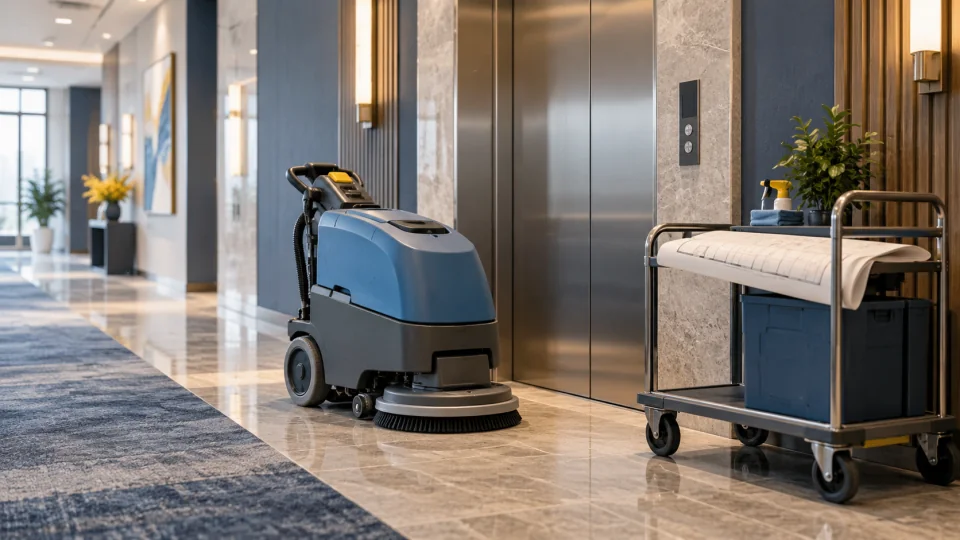
If your building controls loading, lifts, working hours or contractor access, confirm its current rules before booking. Ask the cleaner how equipment will reach the room and which areas need to be cleared.
A long hose, a portable machine or a particular floor number does not by itself prove a better or worse result.
Access is easy to overlook because it feels like the contractor's problem. In a building with shared lifts, loading areas or corridors, however, it affects whether the visit can happen at the time you expected, and a booking made without checking can leave you and the cleaner improvising on the day. Raise it at the quote stage, when changing the plan is simplest.
A managed-building confirmation record
The record below is a suggestion for organising your questions. It is not a statement of what any Toronto building requires, and it does not describe current municipal, tenancy or contractor rules. Use only the lines that apply to your home, and let building management and your cleaner supply the answers.
- Building rules: ask management, in writing where possible, what currently applies to loading, lift use, working hours and contractor access, and record the date and the role of the person who answered. Rules can change, so do not rely on a neighbour's account or on an earlier arrangement.
- Booking steps: ask whether anything needs to be reserved in advance, such as a lift or loading area, and who is responsible for arranging it, you or the cleaner.
- Documents: ask whether management expects anything from a contractor before work starts. Do not assume what that might be; let management say.
- Route: describe the path from the building entrance to your door, including shared corridors, and ask the cleaner how equipment will travel it and how shared surfaces will be protected.
- Clearing: agree which rooms and furniture will be cleared, who does it and by when.
- Flooring permission: if someone else owns the flooring, note who must agree to the proposed method or treatment, and whether that agreement has been given.
- Scope: make sure the written quote names the rooms, any rugs, any stairs inside the unit, the method and any extras.
- Drying and protection: ask how the cleaner will leave the carpet, what they advise about walking on it and how the surrounding floor will be protected.
- Contacts on the day: note who the cleaner should call if access fails and who you will call.
What a hose, a floor number or a portable machine does and does not tell you
Descriptions of equipment are useful for logistics. They are not a measure of quality. A long hose may suit a building where a vehicle cannot park near the entrance, a portable machine may suit a space reached by a lift, and a high floor number may simply mean a longer carry. None of these facts, on its own, shows that the result will be better or worse.
A more useful set of questions concerns the plan rather than the kit. Does the written scope name the method for each material? Does it address drying? Does it say how the route and surrounding floor will be protected? Answers to these tell you more about how organised a plan is, though even they are not a guarantee of a result. The guide to choosing a carpet or upholstery cleaner lists further questions you can put to any contractor.
Permissions and written scope
Where another person owns the flooring, clarify permission for the proposed method or treatment. This is a planning question, not legal advice about a tenant's obligations.
Keep the written scope and the manufacturer's care instructions so that both parties know which textile is being treated and how.
In practice this means keeping three things together: the quote, the care instructions or product name for the carpet, and any message in which an owner or manager agreed to the work. If you do not know who would need to agree, ask the person you pay rent or fees to, or whoever manages the building, rather than guessing. This guide does not say what a tenant or owner is obliged to do, and it does not interpret any agreement or law.
A hypothetical lift, loading and drying sequence
The sequence below is invented for illustration. It imagines a managed-building unit to show how access, loading and drying might be ordered. It describes no real building, no real rule and no measured timing, and another building may need a different order.
- Before booking, the resident asks building management in writing what currently applies to contractor access and loading, and records the reply.
- The resident passes the building's answer to the cleaner and asks how equipment will reach the unit; the cleaner describes the route and the shared surfaces they plan to protect.
- Any lift or loading reservation the building requires is made by whichever party agreed to make it, and the confirmation is kept with the quote.
- The resident clears the agreed rooms before the visit, and the scope in the written quote is checked against those rooms.
- On arrival, the cleaner and resident walk the route and the rooms, confirm the scope and exclusions, and note any existing marks or damage near the work.
- The cleaner carries out the work using the method named in the quote and following the carpet maker's directions as well as the actual product and equipment instructions.
- Before leaving, the cleaner explains how the carpet should be treated while it dries, including when it may be walked on and when furniture can be returned, in line with the carpet maker's directions and the actual product's instructions, with any conflict resolved before the work proceeds.
- Afterwards the resident keeps the quote, the building's reply and the drying instructions, and notes anything needing follow-up, such as an area that still seems damp.
The point of the sequence is the ordering: access is settled before the booking, scope is checked before the work and drying is discussed before the cleaner leaves.
Damp areas
Investigate a leak, persistent dampness or possible mould before routine carpet cleaning. EPA's mould guidance stresses moisture control; cleaning alone does not resolve the source.
If you rent or live in a managed building, the question of who investigates a leak or persistent dampness depends on your own arrangements, and this guide does not decide it. What the guide can say is that the moisture question should be raised with the right person before cleaning is arranged, so that carpet is not cleaned over a problem that has not been looked at.
Describe what you notice, such as a smell, a patch that feels damp or a stain that keeps returning, and keep any message you send about it. Tell the cleaner too, so the scope can be adjusted rather than dampness being discovered halfway through a visit.
Entrance marks and unidentified white residue
For a mark near an entrance, identify the material and follow the manufacturer's spot instructions rather than assuming a white ring is road salt and applying a universal mixture.
An unidentified white residue is not automatically salt. A pale mark could have more than one origin, such as a dried spill, residue from an earlier cleaning product or something else, and this guide cannot tell which applies to your carpet. Because the cause is uncertain, treating it as one known substance risks using the wrong product on the wrong fibre.
A cautious sequence is to note where the mark is and what it looks like, find the carpet's care instructions or product name, check what the manufacturer says about spot cleaning, and stop and ask for advice if you cannot identify the material or the mark does not respond as the instructions describe. The carpet spot and stain chart offers conservative first decisions without a single recipe for every stain.
Before the visit
Use the quote checklist to discuss drying and protection of the surrounding floor. The spot chart offers conservative first decisions without a single recipe for every stain.
A short final check can help: confirm that the building's answer, the written scope and the arrival plan agree; confirm who is clearing which rooms; make sure the care instructions are to hand; and ask what the cleaner advises once the work is done. Keep the paperwork together, and see comparing cleaning quotes and package scopes if you need to itemise a request more closely.
Questions about this guide
Do I need to check with my building before booking a carpet cleaner?
If your building controls loading, lifts, working hours or contractor access, confirm its current rules before booking, and ask the cleaner how equipment will reach the room and which areas need to be cleared. This guide does not state what any particular building requires; management is the source for that.
Does a long hose or a portable machine mean the cleaning will be better?
No. A long hose, a portable machine or a particular floor number does not by itself prove a better or worse result. These details help with logistics. A more useful check is whether the written scope names the method, covers drying and describes how the route and surrounding floor will be protected.
Is a white ring near the door always road salt?
No. An unidentified white residue is not automatically salt, and it could have more than one origin. Identify the material, follow the manufacturer's spot instructions and avoid applying a universal mixture. If you cannot identify the material or the mark, stop and ask for advice rather than guessing.
What if the flooring belongs to someone else?
Clarify permission for the proposed method or treatment, and keep the written scope and the manufacturer's care instructions so both parties know which textile is being treated and how. This is a planning question, not legal advice about a tenant's obligations, and the guide does not interpret any agreement or law.
Sources
Historical topic sources
Archived pages explain the origin of these topics; they are not evidence of current services or health outcomes.